How to Lower Guitar Action Without Buzz (Step-by-Step)
Want lower, easier action without fret buzz? Here’s how to lower it correctly — and why order matters more than the adjustment itself.
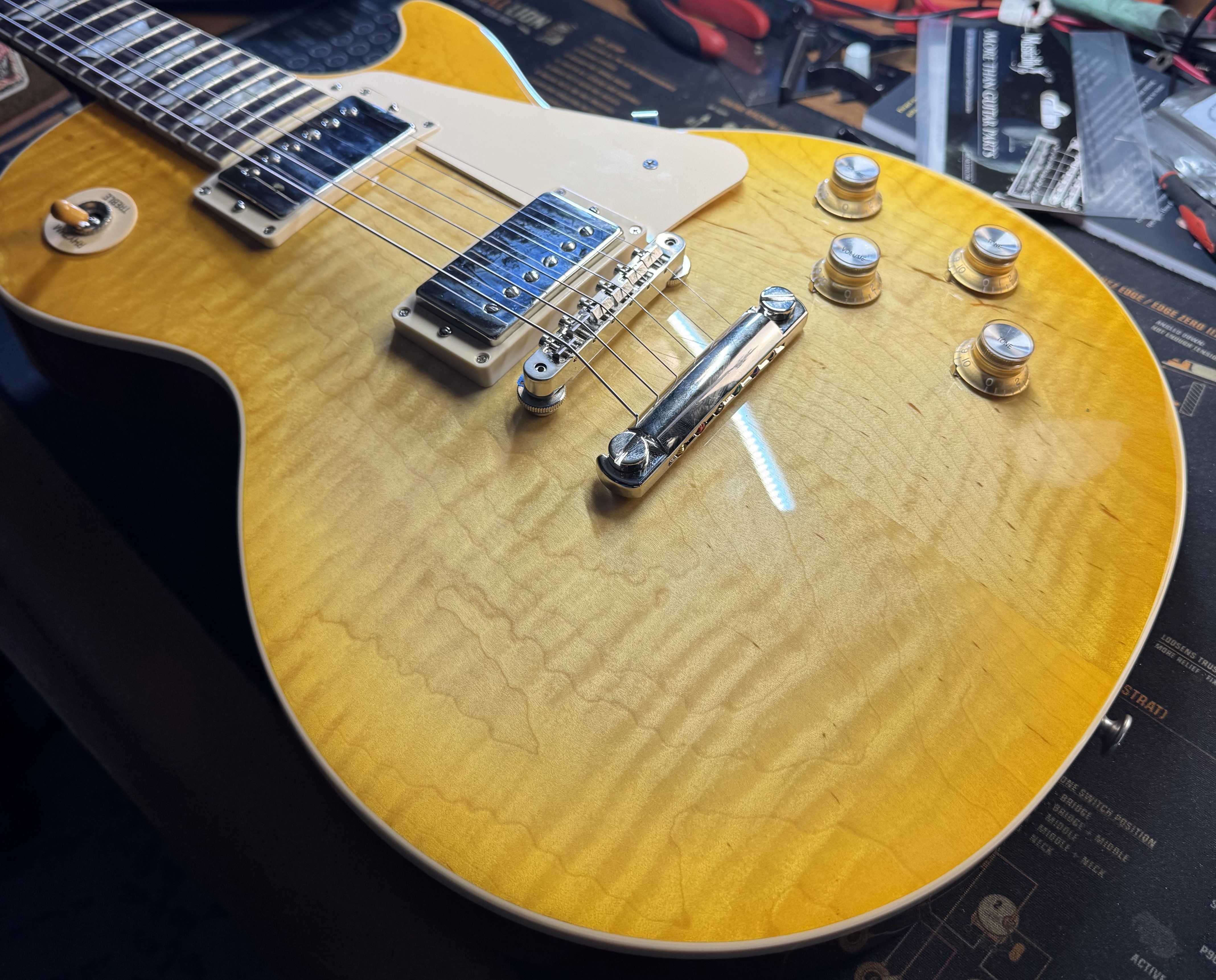
When a guitar comes into my shop, it’s almost always for one of two reasons: high action, or buzz. I’ve done enough setups at this point to know that buzz almost never means something’s broken — it means the guitar has drifted away from its ideal measurements. Here’s how I walk through diagnosing it, in the order I actually check things.
1. Neck Relief Is Off
This is where every setup starts, and it’s the most common root cause of buzz I see.
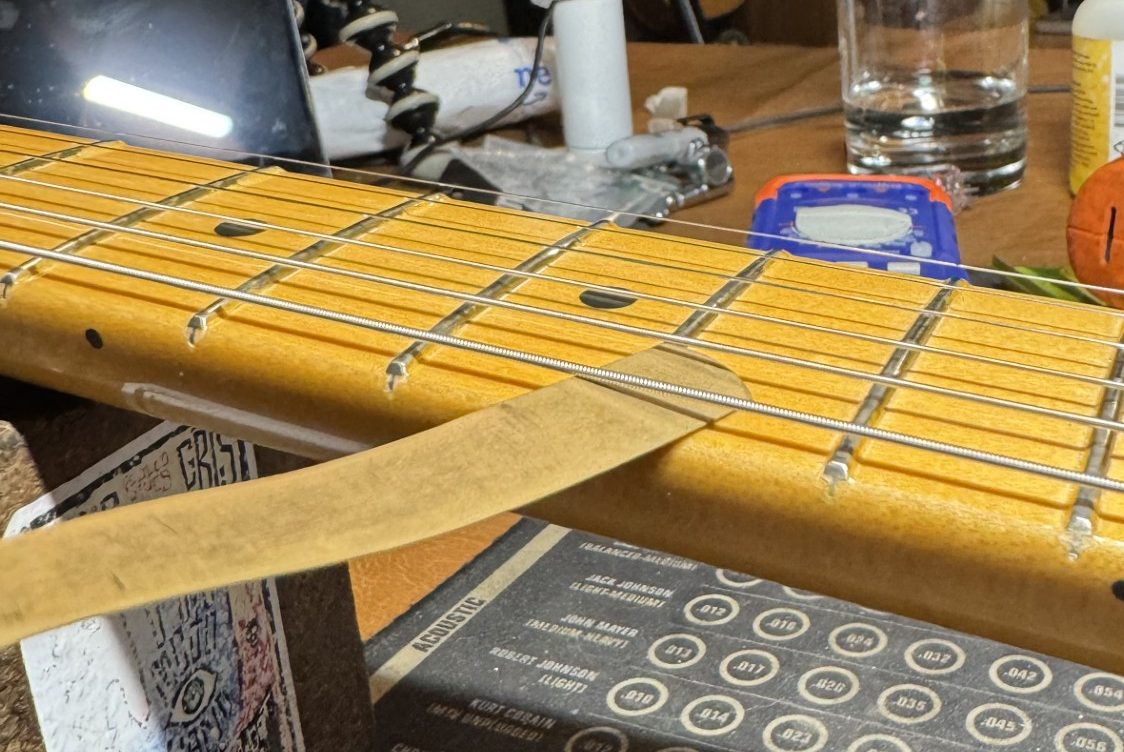
How I check it: Capo the first fret, press down at the fret where the neck meets the body, and slide a 0.010″ feeler gauge under the string at the 9th fret. It should fit snugly — not loose, not lifting the string.
- Big gap: relief is too much — tighten the truss rod
- No gap at all: relief is too little — loosen it
- Feeler gauge lifts the string when inserted: same thing, too little relief
I adjust in 1/8 turn increments, checking after every turn. You can do this with the guitar in tune, and you’ll see the result immediately — no need to wait.
2. String Action Is Too Low For How You Play
What it is: Once relief is correct, string height is the next thing I check. Too low, and the string slaps the frets ahead of wherever you’re pressing.
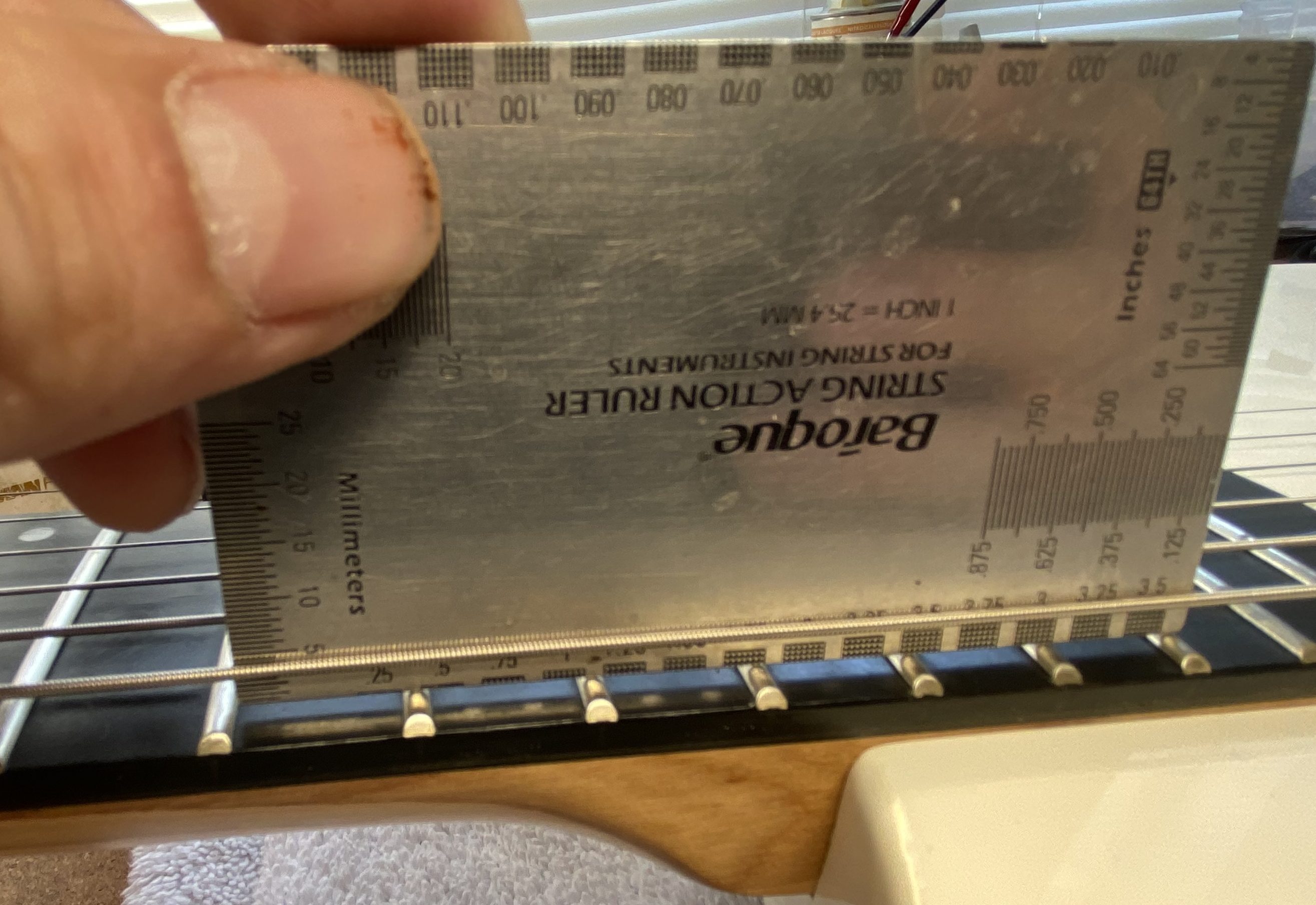
My targets, measured at the 17th fret on an electric: 1.6mm for the wound strings (low E, A, D), 1.5mm for the unwound strings (G, B, high E). On acoustics I measure at the 12th fret instead, and the target runs higher.
These aren’t hard rules — they’re where I start, then I play the guitar and adjust from there. You’ll notice a little natural buzz on the low E and A no matter what; it’s rarely audible through an amp, so don’t chase it to zero.
3. Uneven Frets
What it is: If your relief and action measurements are both correct and you’re still buzzing — especially if it’s isolated to specific frets rather than everywhere — you’re likely dealing with high or low frets, not a setup issue at all.
This is the one cause on this list a setup can’t fix. It needs a fret dressing, which levels, crowns, and polishes the frets so they’re all even. Worth knowing before you spend an hour chasing action that was never the real problem.
4. The Nut
What it is: If a guitar buzzes specifically in the open position, look at the nut before anything else. String height at the nut should be about 0.5mm — measured from the top of the first fret to the bottom of the string.
If that measurement’s low and you’re still buzzing open, the nut slots may need raising, or the nut may need replacing.
5. The “Sitar Effect” — The One Nobody Talks About
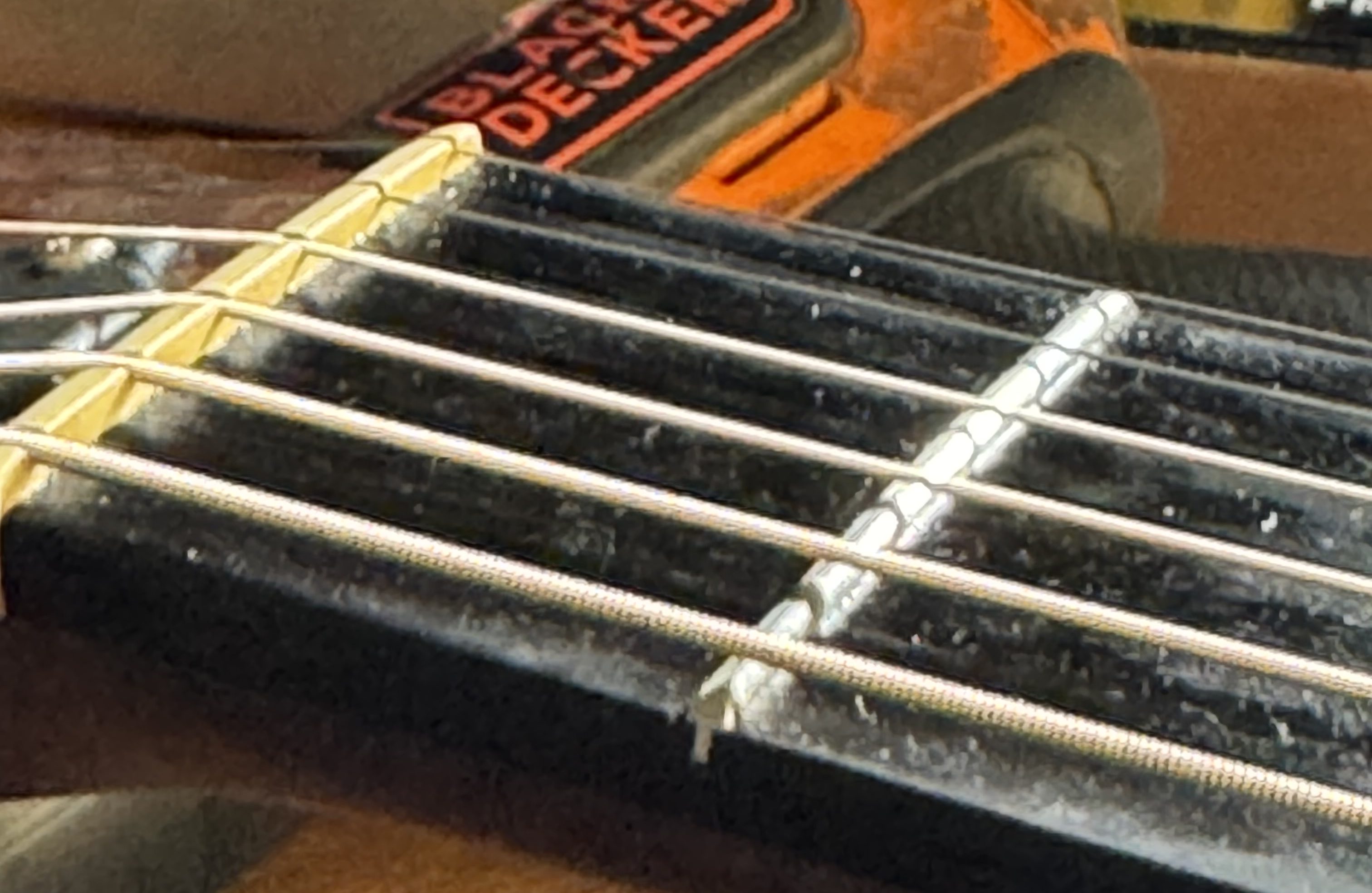
This is genuinely one of the most frustrating buzzes a guitar can have, and I almost never see it covered anywhere else. It comes down to break angle — the angle the string makes as it leaves the nut or bridge.
If the string doesn’t have a defined break angle, it isn’t seated properly, and it won’t vibrate cleanly — you get a sitar-like twang instead of a clean note. The fix is a nut slotting file, angling the slot downward toward the tuning pegs to increase the break angle. String trees help a lot here too — some newer necks don’t have them and genuinely need one added.
6. Loose Hardware
What it is: A loose tuner, bridge screw, or (on active-pickup guitars) a rattling battery can sound exactly like fret buzz.
How to check: Play the buzzing note, then mute the strings completely with your palm and tap the body and headstock. Still hearing rattle with the strings muted? It’s hardware, not the strings.
Why the Order Matters More Than Any Single Fix
Relief first, then action, then everything else — always in that order. Adjust action before relief is locked in and you’ll be redoing the action anyway once the neck settles. This is the exact trap that turns a five-minute fix into an afternoon of chasing the same buzz in circles.
If you want the complete sequence I use on every guitar that comes through my shop — every measurement, every safe zone, for electric, acoustic, bass, and Floyd Rose — that’s exactly what Guitar Setup Mastery walks you through, step by step.
Related reading: Why Does My Guitar Buzz? · How to Adjust Your Truss Rod Safely

